What is Crop Risk?
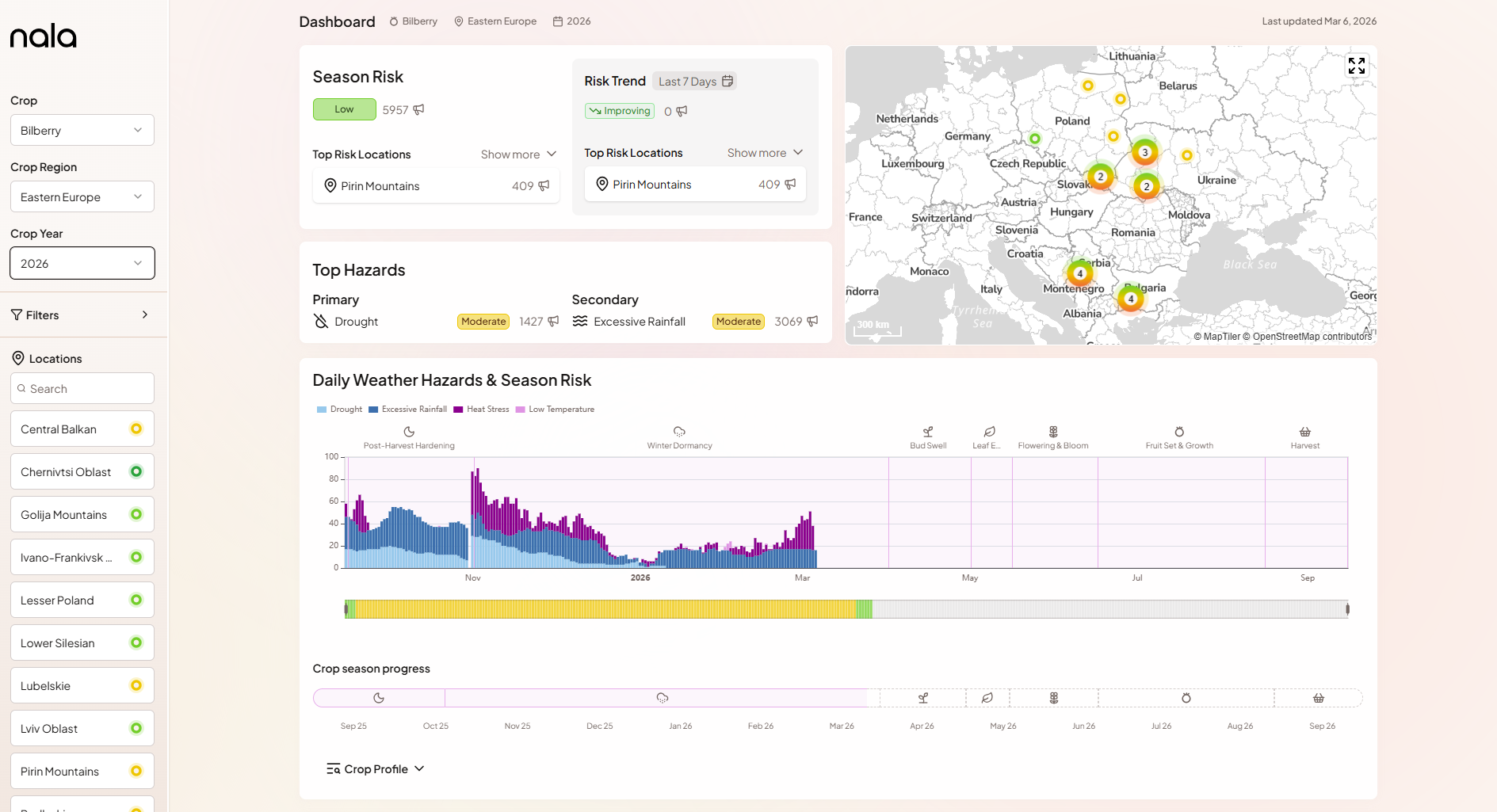
Crop Risk is Nala's weather intelligence platform for procurement, supply chain, and commodity risk teams. It monitors weather conditions across representative production locations for your crops and translates them into actionable risk signals - telling you how risky the current season is and where to focus your attention.
What it does
Weather events like drought, frost, or heat waves during critical crop growth stages can cause significant yield losses - often weeks or months before the impact shows up in market prices or supplier communications. By the time disruptions become obvious, sourcing options are usually limited and prices have already moved.
Crop Risk detects weather stress during the growth phases that matter most, giving you early visibility into where production may be at risk. This lead time lets you act - whether that means initiating supplier conversations, adjusting forward contracts, building a hedging position, or identifying backup sourcing options - while you still have room to do so.
Who it is for
Crop Risk is designed for anyone responsible for managing ingredient or commodity exposure. You do not need meteorological expertise to use it - the platform translates complex weather data into clear risk levels directly relevant to your decisions. Typical users include:
- Procurement managers making sourcing and forward contracting decisions
- Supply chain risk analysts monitoring production disruption risk
- Commodity price risk managers informing hedging positions
- Sourcing strategists assessing regional supply risk
What it covers
The platform covers a growing set of crops across their primary global production regions. For each crop and region, it monitors four weather hazards - heat stress, low temperature and frost, drought, and excessive rainfall - and tracks their severity throughout the full growing season. Coverage is expanding continuously; if you would like to see a specific crop or region added, reach out to the Nala team.
How it fits into your workflow
Crop Risk is built around three common workflows:
- Daily and weekly monitoring - the dashboard gives you a quick read across all sourcing locations, so you can see at a glance which crops and regions require attention
- Seasonal planning - the historical comparison tells you whether the current season is shaping up to be more risky than normal, informing forward contracting and hedging decisions
- Crisis response - when an extreme weather event occurs, rapidly assess its scope across all monitored locations and compare risk across alternative sourcing areas